 how-to
Piercing Aftercare for Sensitive Skin: 2026 Guide
Table of Contents
- What You'll Need for Sensitive Skin Piercing Aftercare
- Step 1: Clean With Sterile Saline Only
- Step 2: Keep the Area Dry and Undisturbed
- Best Metal for Sensitive Skin Piercings
- Signs of Piercing Irritation vs Infection
- How Long Does a Piercing Take to Heal?
- Common Mistakes to Avoid With Sensitive Skin
- Conclusion
- Frequently Asked Questions
Last Updated: September 25, 2026
What You'll Need for Sensitive Skin Piercing Aftercare
Piercing aftercare for sensitive skin comes down to one principle: use less, not more. The Association of Professional Piercers (APP) recommends sterile saline wound wash and nothing else for cleaning a healing piercing. Sensitive skin reacts to extra products, so a short supply list works best.
Here is what to gather before you start:
- Sterile saline wound wash in a pressurized spray can (0.9% sodium chloride, no additives)
- Pre-cut non-woven sterile gauze for patting the area dry
- A fresh pillowcase if you sleep on the side of the piercing
- Fragrance-free, pH-balanced soap for your normal shower routine, kept away from the piercing itself
- Clean hands before every single touch
That's it. No alcohol, no hydrogen peroxide, no tea tree oil, no ointments. At Ancient Adornments, our team provides clear aftercare guidance, because proper aftercare is crucial for successful healing.
Step 1: Clean With Sterile Saline Only
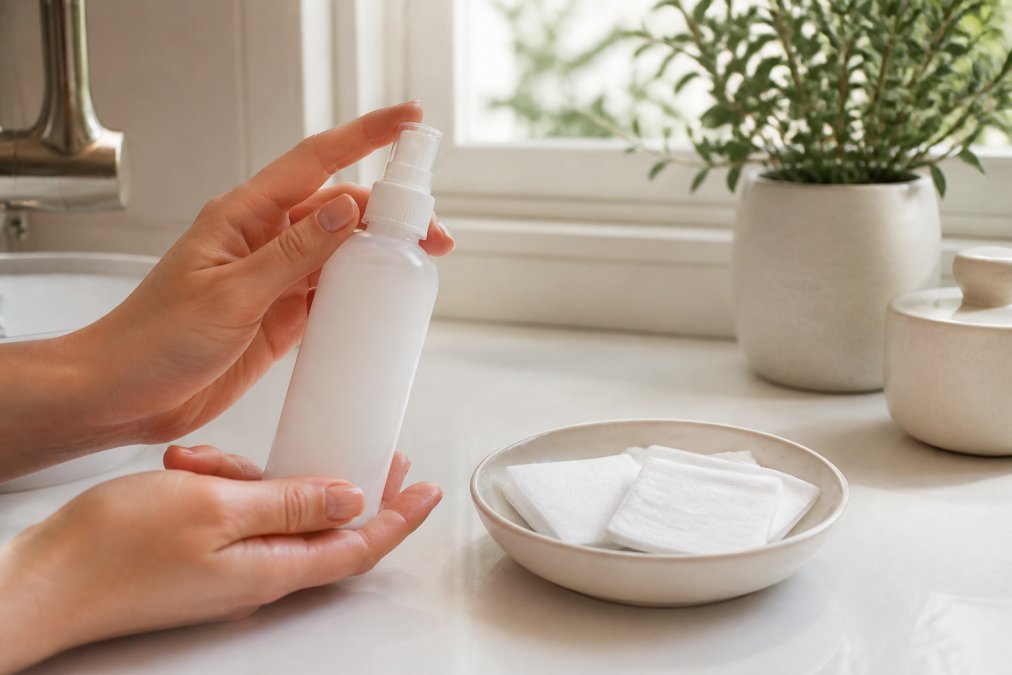
Cleaning takes about 30 seconds, twice a day. Spray sterile saline directly onto the front and back of the piercing, let it sit for a few seconds, then pat dry with sterile gauze. Do this morning and night, and after heavy sweating.
- Spray, don't scrub
- Pat dry, never rub
- Front and back, every time
- Clean hands before and after
Step 2: Keep the Area Dry and Undisturbed
Moisture is the quiet cause of most piercing bumps. After cleaning, dry the area with gauze and then leave it alone. Hair dryers on a cool setting work well for ear piercings if you want extra insurance.
Best Metal for Sensitive Skin Piercings
Implant-grade titanium is the safest starting point for sensitive skin. It is lightweight, essentially nickel-free, and tolerates sterilization without breaking down. But "sensitive skin" is not one condition, it is a set of reactions, and the metal that triggers yours determines what you can wear long term.
Here is how the common options compare:
Metal | Nickel Content | Best For | Notes |
|---|---|---|---|
Implant-grade titanium | Nickel-free | Most sensitive skin, fresh piercings | Lightweight, MRI-safe in most cases |
Niobium | Nickel-free | Sensitive ears, healed or healing | Limited color options |
14k solid gold | Trace or none | Fresh piercings, healed piercings | Must be solid, never plated or filled |
Implant grade steel | Traces present | Fresh piercings, healed piercings | 316LVM is most common used steel but still releases nickel |
Why "Sensitive Skin" Usually Means Nickel
Nickel is the most common metal allergen, and reactions to it are delayed, they show up 12 to 48 hours after contact, not instantly. That delay is why people blame the wrong thing. You wear a new earring, feel fine, then wake up two days later with an itchy, red, weeping patch. The metal was the cause; the timing hid it.
How to Identify Your Metal Allergy
- Track the timeline. Note when symptoms start relative to when you put the jewelry in. A 24-to-48-hour delay points to a metal allergy rather than irritation from friction or moisture.
- Switch to a known-safe metal. Have your piercer install implant-grade titanium. If symptoms fade within a week or two, the previous metal was the trigger.
- Reintroduce cautiously. Once healed, try the suspect metal for a few hours on a healed piercing, never on a healing one. If the reaction returns, you have your answer.
- Confirm with a professional. A dermatologist can perform patch testing with a standard metal series to identify nickel, cobalt, and related allergens. This is the only way to get a definitive answer.
What to Ask Before You Buy
- Ask for the alloy by name, not just "hypoallergenic." That word is unregulated and means nothing specific.
- Ask whether the jewelry is solid or plated. Plated and gold-filled pieces wear through and expose the base metal underneath.
- Ask whether the piece is implant-grade. Implant-grade titanium meets a recognized standard for body contact; "titanium" alone does not.
- For initial and healed piercings only, 14k or higher solid gold is generally well tolerated.
If you have reacted to jewelry before, mention it before your piercing is done, not after. Metal choice is easiest to get right the first time.
Signs of Piercing Irritation vs Infection
Irritation is redness, mild swelling, and clear discharge that settles with better habits. Infection is spreading redness, heat, throbbing pain, and yellow or green pus that smells. One responds to care changes. The other needs a doctor.
Irritation signs:
- Redness right at the site
- Slight swelling that comes and goes
- Clear or pale yellow lymphatic fluid
- A small bump next to the jewelry
Infection signs:
- Redness spreading away from the piercing
- Skin that feels hot to the touch
- Throbbing pain that wakes you up
- Thick, foul-smelling discharge
- Fever or chills
How Long Does a Piercing Take to Heal?
Healing time depends on the spot. Earlobe piercings take 8 weeks. Cartilage piercings like helix or daith take 6 to 12 months. Nose and septum piercings usually need 4 to 6 months. Sensitive skin often heals on the longer end of these ranges.
Piercing | Typical Healing Time |
|---|---|
Earlobe | 8 weeks |
Helix or cartilage | 6-12 months |
Nostril | 4-6 months |
Septum | 4-6 months |
Navel | 6-12 months |
Common Mistakes to Avoid With Sensitive Skin
The biggest mistake is adding products. Sensitive skin does better with fewer ingredients, not more. Antiseptics, essential oils, and antibiotic ointments all irritate healing tissue and slow the process down.
Other mistakes that show up again and again:
- Rotating or twisting the jewelry to "keep it loose"
- Touching the piercing with unwashed hands
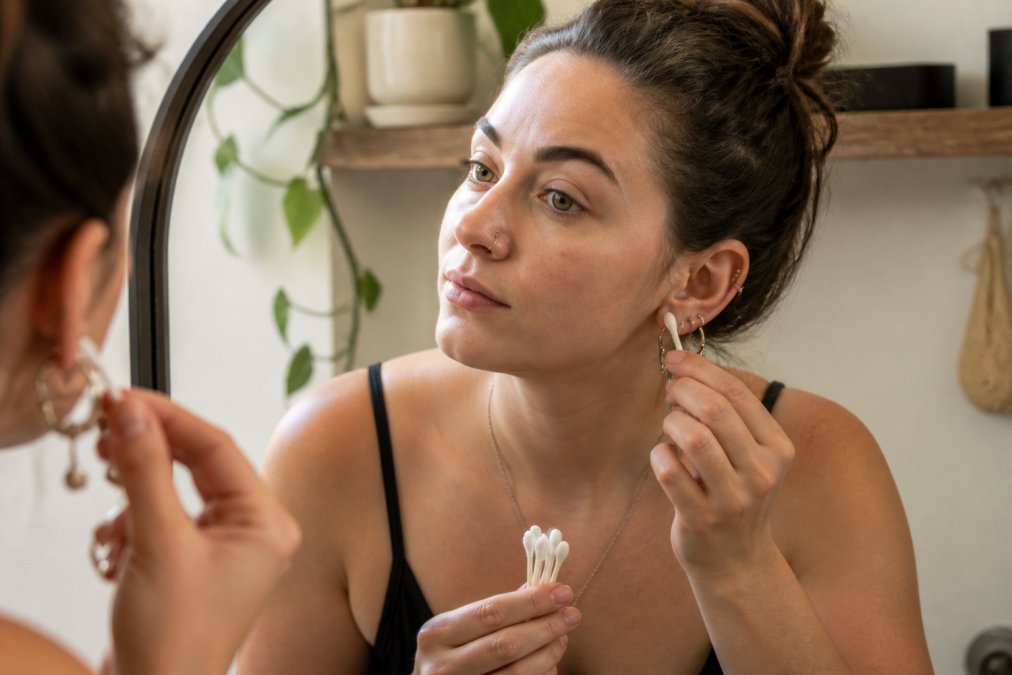
- Using cotton balls, which leave fibers behind
- Switching jewelry too early
- Sleeping on the piercing every night
- Skipping the back of the piercing when cleaning
- Using alcohol, hydrogen peroxide, or tea tree oil on the site
Troubleshooting a Flare-Up, Step by Step
When a piercing that was calm suddenly turns red, itchy, or swollen, work through this in order. Stop as soon as the symptoms resolve.
When to Stop Troubleshooting and Get Help
Irritation responds to care changes. Infection does not. Contact a healthcare provider if you see spreading redness, skin that feels hot to the touch, throbbing pain that wakes you up, thick or foul-smelling discharge, or fever and chills. Do not remove the jewelry on your own, that can trap infection under the skin.
Conclusion
Sensitive skin piercings heal well when you keep the routine simple: sterile saline, dry hands, and patience. The clients who struggle are usually the ones who over-clean or over-touch. At Ancient Adornments, our team sets every client up with implant-grade titanium, a clear aftercare plan, and a follow-up check so nothing gets missed. Our guidance aims to make the whole process feel easy, from first-timers to seasoned collectors.
Frequently Asked Questions
How do you clean a piercing if you have sensitive skin?
Use only sterile saline wound wash, the kind sold in a pressurized can, and spray it directly onto the piercing once or twice a day. Do not use cotton balls or swabs, since fibers can catch on the jewelry and cause irritation. Pat dry with clean, non-woven gauze or let it air dry. Skip alcohol, peroxide, and antibacterial soaps, which strip the skin and slow the healing process. This routine follows Association of Professional Piercers guidelines and works for most sensitive skin types.
What are the signs of an allergic reaction to piercing jewelry?
Redness, itching, and a rash that spreads beyond the piercing site often point to a metal allergy rather than normal healing. Nickel is the most common trigger, which is why implant-grade titanium or 14k nickel-free gold is the best metal for sensitive skin piercings. If you notice a rash, swelling that does not improve, or a weeping discharge that smells, stop using any aftercare product you recently added and contact your piercer. They can swap the jewelry for a hypoallergenic option and check whether the reaction is dermatological irritation or something else.
How long does a piercing take to heal?
Healing time depends on the location. Earlobe piercings typically heal in 6 to 8 weeks, cartilage piercings like helix or daith take 6 to 12 months, and navel or nostril piercings usually need 4 to 6 months. Sensitive skin does not always extend these timelines, but it does mean consistency matters more. Clean with sterile saline daily, avoid submerging the piercing in pools or baths, and do not rotate or touch the jewelry. If the area is still red and tender well past the expected window, have a professional take a look.
Is sterile saline safe for all skin types?
Yes. Sterile saline wound wash contains only 0.9% sodium chloride and water, with no preservatives or fragrances, so it is safe for sensitive, eczema-prone, and allergy-prone skin. It matches the body's natural fluid balance, which is why the Association of Professional Piercers recommends it as the only cleaning solution for new piercings. Avoid homemade salt mixes, since they are rarely pH-balanced and can be too concentrated. If your skin reacts to saline, stop and consult a dermatologist before trying any other product.